

Choosing the right facelift for your needs is key to an ideal result. This blog discusses three popular types of facelifts—traditional SMAS, mini, and deep plane—while outlining key distinctions among them and their potential drawbacks.
Table of Contents
- What’s the Best Facelift?
- Traditional (Full) Facelift
- What Is a Mini Facelift?
- What Is a Deep Plane Facelift?
- Which Facelift Technique Is Best?
What’s the Best Facelift?
Today, people seeking to turn back the clock with facial rejuvenation procedures have a multitude of options. With advancements in technique, in some ways, patients have access to the best the industry has to offer. Some information, however, can be a challenge to find, such as which procedures are worth it and which are fads.
If loose skin, hanging jowls, and deep facial creases are cause for concern, it might be time to start thinking about a facelift. Below, we will discuss the different types of facelifts so you can decide which one you feel is right for you. Ultimately, your decision should be made after discussing your options and desired outcome with an experienced board-certified plastic surgeon.
Extended SMAS Facelift
An extended SMAS facelift is the gold standard for facial rejuvenation in Dr. Flint’s and many practices. Treating the face from the cheeks to the jawline, a facelift can create an elegantly rejuvenated result without looking pulled, overdone, or false. Most facelifts include a necklift, but not all. By elevating the SMAS (superficial musculoaponeurotic system) layer separately from the skin, the cheek fat and jowls can be elevated to a more favorable position. The skin can then be gently re-draped without using tension. A tight face is not an aesthetically appealing face. Once the deeper tissues are re-positioned favorably, the skin can be gently re-draped in the appropriate direction, and beautiful results are obtained.
Experienced plastic surgeons who have performed many facelifts, like Dr. Patti Flint, prefer this method over all others because it not only provides a dramatic yet natural-looking result, but it also preserves the patient’s authentic facial structure and allows the skin and tissues to age naturally. Certain other techniques may yield dramatic results, but they do not allow the face to age as it normally would, potentially leading to distortions down the line.
A facelift typically requires about three weeks of downtime, with patients returning to work and normal activities afterward. Many patients can work from home after the first week. More strenuous activities, such as exercise, bending, and lifting, are prohibited for three weeks. Incisions for a facelift vary, but are typically hidden in creases in front of, behind the ears, and within the hairline behind the ears. Traditional SMAS facelift results can last 10–15 years, depending on genetics, skin care, and sun protection.
The traditional SMAS facelift tightens the jawline, reduces the appearance of jowls, smooths deep facial creases, and maintains the patient’s authentic features. Dr. Flint focuses on putting the tissues back where they used to be, not into positions they have never lived in. Consequently, you will always look like you to friends and family, just a more youthful version of you.
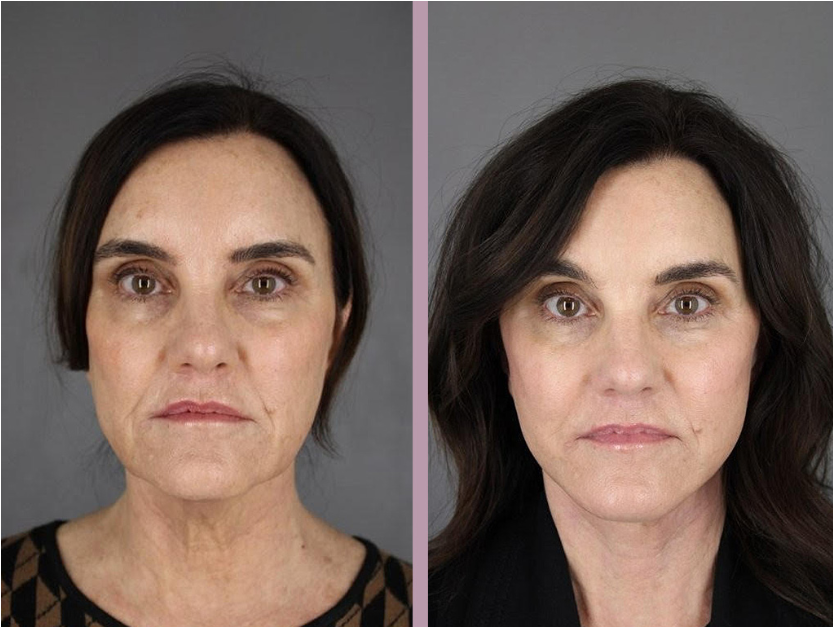
SMAS facelift before and after: Patti Flint, MD.
What Is a Mini Facelift?
A mini facelift, sometimes called a short-scar facelift or weekend facelift, is a less invasive facelift technique that addresses sagging skin in the lower face and jawline, but not the neck. It may be ideal for younger patients with good-quality skin, or those with minor, localized aging concerns, as it primarily targets the jawline and jowls.
Patients might opt for a mini facelift as it requires shorter incisions and has a shorter recovery time. However, this procedure is not ideal for patients with more advanced signs of aging or with laxity in the neck. Additionally, most patients will require additional facial rejuvenation procedures down the line to maintain results.
What Is a Deep Plane Facelift?
A deep plane facelift is the newest technique, becoming increasingly popular for the dramatic results it delivers. The main difference between an extended SMAS facelift and a deep plane facelift is that in a deep plane facelift, the deeper tissues and the skin are left attached to each other instead of being lifted in two separate layers. This results in a dramatic revision of sunken cheeks, deep nasolabial folds, and loose skin, restoring a plump, youthful appearance by replacing tissues and fat pads in their positions from the patient’s youth.
The drawback, however, is that all the tissues are generally lifted in a straight vertical direction. If there is significant wrinkling in the skin, the wrinkles can land in an unnatural position and look like a Nike swoosh on the cheeks. Even if there are no deep wrinkles at the time of the procedure, when they do develop down the line, it can look unnatural.
Which Facelift Technique Is Best?
Dr. Patti Flint has 30 years of experience performing facelift surgery that creates a natural, “you but better” outcome using the extended SMAS technique. This allows her to customize the patient’s results and maintain their natural features, while treating as many of their concerns as possible without causing a false or overdone result. She believes that the extended SMAS technique is ideal, as it provides long-lasting results and makes the patient look and feel refreshed, while allowing their features to age gracefully over time.
However, the choice is ultimately up to you and what you want to achieve with the procedure. These decisions should be made with the guidance of an experienced board-certified plastic surgeon. The best way to learn which option is right for you is to do your research, question what you want for your results, and schedule a consultation with a board-certified plastic surgeon.
Want to Learn More About SMAS Facelifts in Scottsdale, AZ?
Dr. Flint is ready to help you achieve your most beautiful, confident self. During your consultation, Dr. Flint will offer her expert advice and opinions so you can make an informed decision about your facial rejuvenation experience. Call Dr. Flint today at (480) 945-3300 or complete the contact form to get started.