
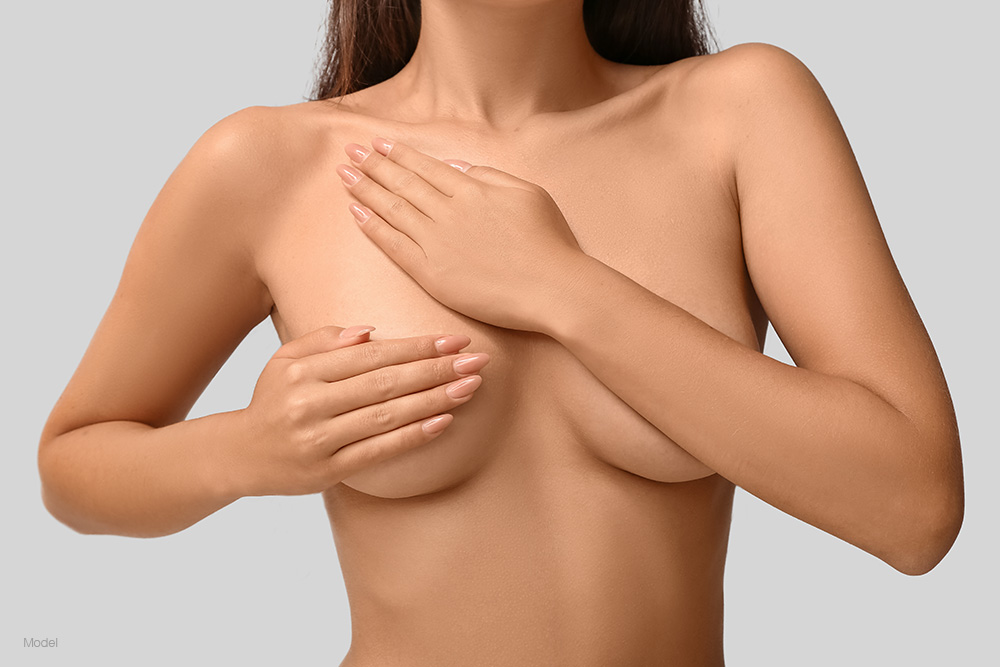
Breast augmentation scars, when well-placed and cared for post-operatively are generally close to imperceptible.There are some ways to reduce the risk of large or dark scars. This blog discusses the different types of breast augmentation incisions so patients can get an idea of where scars might be, as well as how to care for scars for a better result.
Does Breast Augmentation Leave Scars?
Breast augmentation is one of the most popular cosmetic procedures and is among the procedures with the highest satisfaction rates. It’s not just about increasing the size of the breasts, although that is one of the main benefits; it can also enhance the shape, roundness, cleavage, and symmetry. It’s ideal for women who have naturally small breasts, as well as those who have lost volume due to aging, pregnancy, or weight loss.
If there’s one drawback, it’s the possibility of scarring. However, breast augmentation scarring is minimal when the procedure is performed by an experienced, board-certified plastic surgeon. Breast augmentation scarring is directly related to the position and size of the incisions, so we’ll discuss the different breast augmentation incisions below.
Breast Augmentation Incision Types
As plastic surgery techniques advance, more incision types have been developed to accommodate patients’ changing needs and preferences. The choice of incision depends on your goals for the procedure.
Inframmamary
The most popular incision type is the inframammary incision. This incision is usually about two and a half inches in length and when planned appropriately will fall into the crease underneath your breasts. The resulting scar is easily hidden beneath the breasts, bras, bathing suits, and other clothing.
Periareolar
The periareolar incision is usually placed around the edge of the lower half of the areola. While it is placed in the border between the areola and the breast skin, it can be more visible because it is on the front of the breast. This incision type can be limiting for the surgeon’s visibility during surgery, so some surgeons use it only for small or saline implants.
Transaxiliary
Even less common is the transaxillary incision, which is not on the breasts at all, but in the armpit. Sometimes called a “scarless breast augmentation” (although that’s a misnomer, as all surgery results in scars), the transaxillary approach is more complex than others, generally requires the use of endoscopic equipment, and has a higher revision rate than other approaches.
Transumbilical (TUBA)
Similar to the transaxillary method, a transumbilical breast augmentation results in no visible scarring on the breasts, as the incision is in the patient’s belly button. This option is also only available for saline implants, and many implant manufacturers will not warranty implants that are placed with this approach.
Which is the best incision for breast augmentation?
There’s no “best” breast augmentation incision, as it really comes down to your personal preferences and those of your surgeon.
Dr. Patti Flint is a breast enhancement expert who has performed countless breast augmentation procedures over her 30-year career as a Scottsdale, AZ, board-certified plastic surgeon. Her preferred incision type is the inframammary incision, as it is the safest and most reliable method, and it allows for the most patient customization. Additionally, she is adept at creating thin, nearly invisible scars through expert suturing techniques, so the benefits outweigh the risk of scarring.
However, if you’re unsure which incision type is best for you, it’s best to schedule a consultation and learn about your options.
How to Care for Breast Augmentation Scars
The incision and suturing are only half the story when it comes to breast augmentation scars. Recovery and long-term scar care are just as important to your end result.
The skin is sealed at forty-eight hours post-op. Usually your surgeon will have applied a butterfly tape over it. Once that falls off you should start a scar treatment regimen to help the scar mature and fade.
Here are some helpful tips for reducing the appearance of breast augmentation scars:
- Follow all recovery instructions, including movement restrictions and incision aftercare. Applying stretch or tension to a new incision can result in thickening and widening of the scar and should be avoided. Proper incision care can reduce the risk of unsightly scars.
- Protect your scars from the sun for as long as possible. This means no direct sunlight, always using a strong SPF, and avoiding tanning. Sun exposure almost always results in darker scars.
- Use a scar cream, ointment, or silicone sheets recommended by your surgeon. As soon as you are cleared to do so, usually once your incisions seal, you can begin implementing scar care into your routine. Gently massaging healing scars can also help break down some of the collagen that has built up around raised scars.
- Be patient. Scars can take up to a year to fully mature, sometimes longer. With proper care and by following your surgeon’s instructions, you’re more likely to end up with thin, light scars that are barely noticeable.
Want to Learn More About Breast Augmentation in Scottsdale, AZ?
Don’t let scarring stop you from getting the breast augmentation results you’ve always dreamed of. Choose an expert who can minimize this risk and help you customize your results. Call Dr. Patti Flint today at (480) 945-3300 or complete the contact form to request a consultation.